

From Oasis to Lana Del Rey - Here's why Cardiff's music scene is thriving
Oasis, the grassroots, and a gig calendar to brag about. We take a look at the Music City initiative, which has helped Cardiff’s music scene go from strength to strength, with comments from council member Ruth Cayford and DEPOT founder Nicholas Saunders.
Skiddle Staff
Last updated: 19th Dec 2025
In the words of Liam Gallagher, “Cardiff is the b******s”. That was the Britpop legend’s response on Twitter to a fan, who had asked why the band kicked off their reunion tour in the Welsh capital. A huge honour for the city, it was also an indicator of how Cardiff has now become a key stop-off for most touring artists.
Head of Creative Industries and Culture Development at Cardiff Council, Ruth Cayford, spoke to us about the city’s blossoming reputation. “When major acts like Oasis choose Cardiff to launch their tours it sends a clear message; Cardiff is a must-play city. The council has worked hard to make Cardiff attractive to promoters and artists, and it’s paying off. These events help put Cardiff on the map as a cultural destination.”
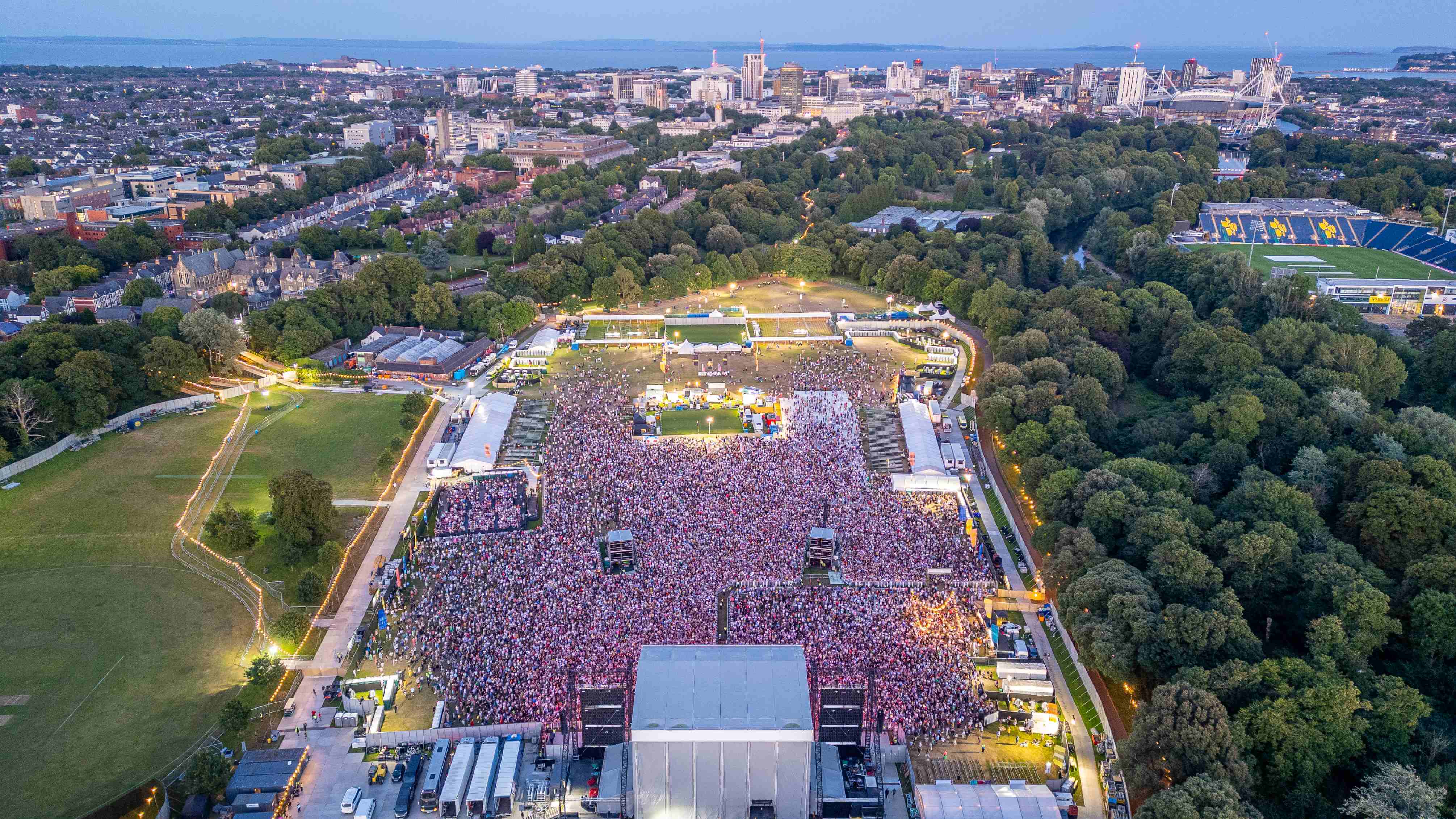
(Cardiff's latest outdoor venue Blackweir Fields)
In recent years, in lieu of the pandemic and the ongoing cost-of-living crisis, music venues and the hospitality sector have taken the brunt of funding cuts and rising operational costs. Councils across the UK aren’t prioritising cultural investment. In 2017, Cardiff announced that it would be a “Music City”, and in recent years it has been reaping the rewards of such an initiative.
Taking a look at Cardiff’s 2025 calendar, you’ll see a plethora of international stars have played gigs in the city. With these massive shows taking place across Cardiff Castle, Blackweir Fields and the Principality Stadium, Cardiff can boast of having one of the busiest large-scale gig calendars in the UK. “I think Oasis choosing Cardiff for their tour was a huge catalyst for a massive summer,” begins Nicholas Saunders, Founder of Cardiff venue DEPOT, who also promotes shows at these larger venues. “We’ve had seven shows in the stadium, one of the biggest programmes we’ve had in years. We had 19 shows in the Castle, and four at our new site Blackweir.”
Artists including Kendrick Lamar, Stevie Wonder, Lana Del Rey and Noah Kahan are just a few of the names who delighted Cardiff crowds in 2025. And, these large-scale events are clearly having an impact on the city. “The numbers are clear: music events bring in visitors who spend money locally. It’s not just about venues, the whole economy benefits. For example, the Oasis concerts alone generated in the region of £27 million for Cardiff’s economy, and last year’s Taylor Swift show saw a 902% increase in tourism spend,” Cayford says.
That greater footfall in the city is benefiting local businesses, as Cardiff and the Music City initiative strive to show that investing in culture can allow music to be a key foundation of the local economy. With all of these large shows taking place, what has the impact been on smaller grassroots spaces in the city? “Speaking with venues around the city, the Castle events have been a massive help during the summertime for those smaller venues,” Saunders says.

“Artists who have played venues such as The Castle and Blackweir have then gone on to play afterparties in venues like Clwb Ifor Bach and District.” Cayford is keen to emphasise that grassroots venues are the “Beating heart of Cardiff’s music scene”, outlining the support that they receive from the council. “The Grassroots Venue Fund is just for them, and there’s been direct support for redevelopment, new equipment, and even finding new homes for venues at risk.”
But, even with some venues receiving support, it isn’t always enough. Just this year, The New Moon, which received funding to reopen, had to close their doors again at the end of October, citing slow trade and rising expenses. Now, another venue that has received funding, Paradise Garden, have also reached out for help due to low turnouts. Cardiff is still susceptible to the problems plaguing live music, with the rising costs a more palpable threat to grassroots spaces.
“It’s the increasing costs, and that doesn’t necessarily mean directly the venue, but also the artists themselves. It’s even the person driving the bus for the artists, everything is increasing. Unfortunately, the price that venues can charge doesn’t fall in line with the cost increase, and that’s the most painstaking thing about being in the sector at the moment. The cost of living is hampering the growth of some venues,” Saunders says.
Cayford mentions the ways in which the council’s investment has benefited the local scene. “Cardiff has been proactive, with a dedicated Grassroots Venue Fund (nearly £200,000 awarded so far) supporting venues like Clwb Ifor Bach, Porters, Chapter Arts Centre, and newer spaces like Paradise Garden and The Canopi. The council also consults the Music Board on planning decisions to protect venues. We don’t have unlimited resources, and some challenges are national, but Cardiff is doing more than most to keep its venues alive.”
Earlier this year, from October 3rd to 18th, Cardiff Music City festival took place. It platforms all things associated with the city’s music scene, spread over multiple venues and featuring artists from across the world. “The festival celebrates what makes Cardiff’s music scene unique: creativity. Music, community spirit, and a willingness to try new things,” Cayford says.
Saunders sees the potential of Cardiff’s dedication to bringing some of the world’s biggest names to the city to inspire upcoming Welsh artists. “People within Cardiff and South Wales see these huge names coming to the Castle, to Blackweir and the stadium. There is a pathway for them to then pick up a guitar, get in a band, to learn to DJ and play in smaller venues. Then, they’ll have the aspiration of playing the bigger ones, you need people to see it, to be aware of it.”
DEPOT itself celebrated ten years in the game this year, providing Cardiff with a medium-sized venue that brings in huge names from a wide spectrum of genres, from indie to electronic. One of the strengths of the music scene in the city is how supportive members of the community are of each other. “We’ve joined forces with the likes of Clwb on multiple shows this year, and we’ve got some next year too. I think it shows the unity of independent promoters in Cardiff.”
There’s plenty to shout about at the moment when it comes to music in Cardiff, and Cayford feels incredibly positive about what the scene’s future is going to look like. “The rise of new venues like The Canopi, the success of the Cardiff Music City Festival, and the way local artists are breaking through—bands like Panic Shack, CVC, and artists like Mace the Great are making waves nationally. The Welsh Music Prize is shining a spotlight on homegrown talent, and there’s a real buzz around the city’s creative spaces. Plus, the fact that Cardiff is attracting major tours and still supporting its grassroots—that’s a success story in itself.”
With a strong grassroots scene, which is being strongly supported by the local council, Cardiff is bucking the trend when it comes to investment in its music scene. It’s a blueprint for how councils can start to put the arts to the centre of their economic growth. When culture is thriving, the rest of the city feels that impact; this is why Cardiff’s music scene is more on the map than it has been before. This is why Cardiff is the b*******.
Follow us on Instagram, TikTok, Threads, Facebook, and YouTube for the latest music and events content.


Read more news




Articles you may be interested in


related artists


Gigs ● Clubs ● Festivals ● Things to do
“On your side since 2001, because we believe true fans deserve a fairer and smarter way to discover events they love.”
Why use Skiddle?
- Rated 5 stars on reviews.co.uk
- Over 17 million tickets sold
- Over 4.3 million happy customers
- Skiddle Supports - Together, we are More Than A Ticket
- Official Primary Ticket outlet
- Established 2001
- Support the Fanfair Alliance
- Sustainability - Make a positive impact
© 2001 - 2026 Skiddle Ltd | Skiddle is a registered trademark | ALL RIGHTS RESERVED