
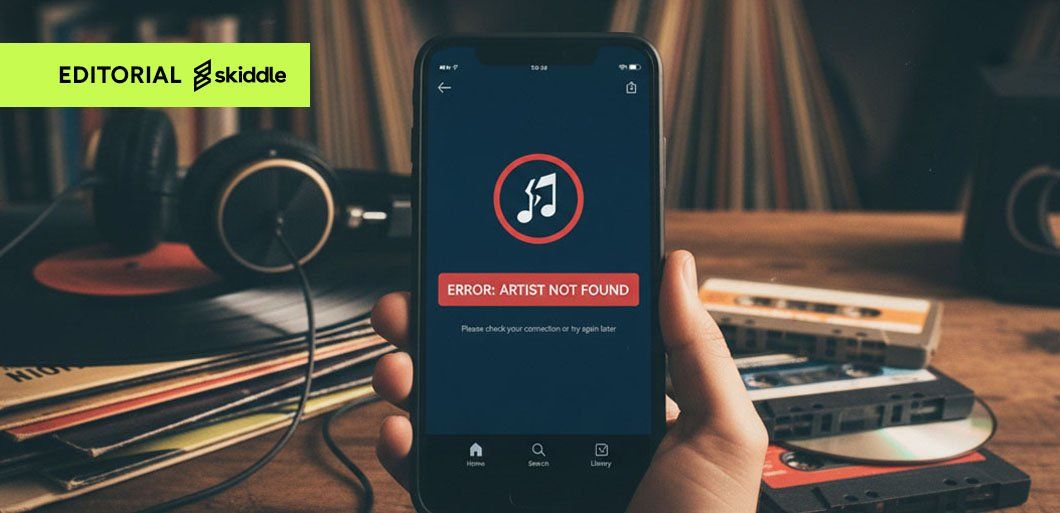
Offline-first: Reclaiming music from the algorithm
Limited physical releases, mailing lists, and word-of-mouth buzz - could opting for an offline-first strategy help artists to reconnect with fans in a more valuable and meaningful way?
Skiddle Staff
Date published: 27th Jan 2026
From someone who can’t yet be considered a veteran music fan, though has been to his fair share of gigs, bought countless band tees, and collected numerous records over the years, music discovery, “back when I was a lad”, was starkly different to what it is these days.
The art of finding new artists involved time, effort and serious dedication. To acquire the tracks said acts were releasing, usually from some suspect peer-to-peer network, and to convert them into a format that would allow you to listen to them, even more so. And yet, my endeavours were never as challenging as those of the generations of music fans that came before me.
Music magazines, such as Mojo, Q, the NME, and Kerrang, and TV channels like MTV, VH1, and Scuzz, were my go-to sources for discovering the latest names making waves. Sometimes, I’d get recommendations from the soundtracks of the games I’d play on my now retro console, and often, I’d get burned copies of albums passed down from the elders in my group of mates. All these means were quickly succeeded by the likes of MySpace and YouTube as the era of social media dawned.
Music discovery back then seemed more deliberate. Records weren’t curated for you as they are today, presented in tidy playlists or pushed because someone with a similar digital footprint listened to the same artists. You had to put in the hours to unearth new names and genres based on your own taste. Entire weekends could vanish, lost down the rabbit hole of a YouTube sidebar, lured by the promise of new sounds.
The thing was, I wanted to go looking. It wasn’t a chore or something I’d have to set time aside for in my calendar. A task to undertake. It was a pleasure, a privilege even, and the highs that came with eventually finding that group or artist, the one that would become an obsession for weeks, months, or even years on end, that would gain you bragging rights among your mates and might even go on to soundtrack some of your best moments as you grow older… Unparalleled.
As I’ve alluded, modern times don’t call for manual music exploration as much as they once did. There are still thousands of artists, subgenres, and internet radio stations out there waiting to be found and appreciated. The types that may never reach a mainstream audience, whether intentionally or unintentionally. But this age of convenience means that the joy of discovery has in part been taken away from us. Try then to gauge my enthusiasm upon hearing that a handful of contemporary artists, operating particularly within the indie scene, were promoting themselves and their records offline, leaning more towards the analogue methods of yesteryear. A spark ignited within me. I was suddenly 15 years old again, plugged in with wired headphones, banishing my parents from my room, ready to listen and learn more about these artists and the reasons behind them making such bold moves.
"When the audience has put something on the line, everything is felt stronger."
Liv, synth player in 1000 rabbits.
Let’s first give a brief overview of how we arrived here. As touched upon, music discovery is now mostly platform-led. We know this because the British Phonographic Industry, or BPI, released an analysis of the Official Charts Company data in 2025, which shows that streaming in the UK accounted for almost 90% of all recorded music consumption. Plus, you only have to open your music streaming app to be presented with numerous playlists, each providing you with new music, the likes of New Music Friday on Spotify or New Music Daily on Apple Music. And this is great, to some degree. I’ll be the first to hold my hands up and say I’ve benefited from finding new artists using these playlists, which are so unbelievably relevant to my palate that it’s equal parts scary and impressive. The problem lies in how we consume - scratch that - how we listen to and connect with these new finds. Music is for listening, not consuming - an important distinction.
As streaming platforms have become the main gateway to new music, more passive modes of listening are becoming common. We’re engaging less with artists and the albums they’ve worked painstakingly hard to create, instead allowing algorithms to guide our choices. Where’s the need to go on the hunt when everything is compiled for us and served up instantly?
Adding further to the problem, many listeners have become reliant on so-called “mood music” - tracks that sit quietly in the background while we work, commute or tick off daily tasks - often without giving much thought to who actually made them. There’s even a name for this behaviour: the “lean-back listener”, a term coined by author Liz Pelly in her book Mood Machine.
Together, these shifts contribute to a gradual erosion in the perceived value of music, driven by overabundance and a growing disconnect between artists and listeners. So what are musicians doing to push back and rebuild that connection?
Instead of chasing algorithms, many of these artists are looking back to move forward, blending old-school promotion with selective digital use. The focus is shifting towards offline-first discovery: building reputations on stage and through word-of-mouth, not just on screens.
That means delayed streaming releases. It means flyers, demos and driving mailing list sign-ups at shows. The goal isn’t mass reach, but meaningful connection: building communities of fans who discover music in rooms, not recommendation feeds.
It’s a deliberate injection of friction into a system built on convenience. And for a growing number of artists, it’s paying off.
One of the most talked-about acts in the UK right now, Westside Cowboy, has been hitting the stages of some of the best music discovery events, such as Brighton’s The Great Escape, and even performing at festivals the likes of Glastonbury, drawing in big crowds, with only a handful of tracks available online. Their first EP, This Better Be Something Great, landed as recently as August 2025. The strength of their tracks and their live performances, and a crude demo that had been circulated among the masses via a mailing list signup, helped the band gain momentum.
Groups that came before them, such as PVA, also benefited from using a similar blueprint, relying solely on the prowess of their live shows to generate buzz and bookings. They performed at Green Man Festival, at Brighton’s Test Pressing Festival, and supported the likes of Black Midi, amassing a sizeable and loyal fanbase with almost no online presence.
Another example is that of London-based genre-blending outfit, 1000 Rabbits, formerly known as Rabbitfoot, who’ve been captivating audiences with their unique sound and energetic live shows in the capital as of late. You won’t find much of them on social media, a single video of a particularly mesmerising set at the fabled birthing ground of many of the best alternative acts to come out of Britain in the past 10 or so years, The Windmill, and there’s no music to be streamed.
Liv, the synth player in the band, explained the reasons behind 1000 Rabbit’s offline-first approach.
“It's definitely considered. You only get to do your debut release once, and we really wanted to get it right, so we held off for a long time. We're lucky to be in the scene in which we're in, where word travels well, and venues draw crowds that are really into ‘new music’, which really allows you to see what gets people excited without having to commit heavily and early on a recording.
“Live music is all about communication with the audience, and building a crowd of people who want a certain tune to be released rather than drawing a crowd who want a certain song played gives the eventual releases more emotional weight to those who stuck it out with you in the small rooms, which is definitely what we want.
“When people choose to spend their time and money watching us, it inspires us not just to play well that night but also to give these people a band worth following. Social media can be so low-commitment from all angles that it's hard to tell what actually sticks. When the audience has put something on the line, everything is felt stronger.
“We will be releasing music soon, so for us, we're near the end of this way of being. But there are many bands and acts out there today who have ridden it further, so it's definitely viable. When we do release, we're aiming to have a real focus on physical copies of our music available, to give people something ‘real’ to hold on to, which relates to that offline/online idea.”
If this approach continues to grow, it could mean that gigs and live events are likely to become even more important as discovery spaces. Yes, cozzie-livz has made regular gig-going harder for a lot of people. But across the UK, grassroots venues and trusted promoters are still doing the work, offering affordable entry points into new scenes and emerging talent. Manchester’s Now Wave regularly hosts ‘Mood Swings’ at YES, showcasing rising artists for just over the price of a pint. In London, The George Tavern’s TGT Presents series continues to spotlight new acts for as little as £4. Even at smaller regional venues like Sunbird Records and The Ferret in the North West of England, fans can catch buzzy new names without breaking the bank.
What this trend really highlights is the renewed importance of live music spaces and the communities built around them. These rooms aren’t just venues; they’re where scenes are formed, careers begin, and music culture actually happens. And if the future of music depends on anything, it’s on keeping these spaces alive.
For music fans, the payoff is immediate. By artists using these strategies and keeping their music offline, they’re creating intrigue - something we don’t see a whole lot of these days in music. Upon first hearing about Westside Cowboy some months ago from a friend, I was compelled to go and do my own research. Bands like these are basically saying to fans, “Hey, we’re here, but we’re not gonna make it easy. Come find us to hear what we’re all about”. And those that do make the effort to find them, as I can now vouch, tend to become fiercely engaged. They make up part of an interactive community who don’t just attend shows and listen to the music, but actually participates in the culture surrounding them. They’ll meet like-minded people in the process and strike up conversations in real life. Heck, they might even go on to form their own bands!
And this is all music to my ears, if you’ll pardon the pun, because I’m frankly bored with having everything suggested to me. “Because you listened to (insert band name here), we think you’ll like…” Bring back music discovery that isn’t based on what people like you might be interested in. Yes, curation can be good from time to time, but maybe allow yourself to see what else is out there without the help of a few sequences of code.
Artists leaning into offline-first strategies are helping to foster connections and a sense of community among music fans. It gives people the feeling of being part of something much bigger. A society or a tribe. As a brucey-bonus, the artist wins too. More fans at live shows means more ticket sales, merchandise and record sales. Its a win-win for all.
Of course, these sorts of off-the-grid activities aren’t new to us (see the aforementioned “traditional means of promotion”). This is how artists and sometimes entire genres of music and their fans of eras been and gone built their own scenes, way before the use of the term “algorithm” became widespread. Interestingly, most of the time, it was in revolt against the established order of things.
Take, for instance, the punk movement. At the time of punk's arrival, in the 1970s, commercial rock was king, followed closely by disco and soul. It was played across every radio station, splashed across every magazine, and rock acts, the likes of Queen and Pink Floyd, filled the rosters of most of the major labels. Punk, being the anti-capitalist movement it was, wasn’t getting a look in. It was seen as too abrasive and controversial, i.e. bad for sales. So, it went DIY. Artists created their own labels and financed their own records (see The Buzzcocks' debut EP, Spiral Scratch, released in 1977), while fans created a culture around them - the fashion and zines which still heavily influence and inspire us today. They didn’t rely on the dominant musical ecosystems of the time. Instead, they created their own value chain and benefited from doing so.
It wasn’t just the punks doing punk things, either. Dub culture was uncompromisingly counter-establishment. Sound systems were seen as their own media institutions in opposition to the mainstream, acting as tastemakers and putting fans onto new music. Records and musical knowledge were passed down from person to person and depended largely on existing relationships. Techno operates in much the same way today. A direct descendant of dub, techno uses white labels - unmarked records used specifically to circulate music, usually between artists, outside of the mainstream - to preserve the integrity of the sound and the culture, and to strengthen its community.
What we’re seeing happening in the present is simply a recurrence of what’s happened before. It’s a response to the over-commercialisation of music, and it’s a trend that’s being mirrored across other cultural sectors.
Tired of being bombarded by ads and recommendations, more people are starting to question how digital-first their lives really need to be. Over the past few years, growing conversations around screen time, digital fatigue and online burnout have pointed towards a desire to rebalance and spend more time offline.
Some fans are even experimenting with small but noticeable behaviour shifts, from limiting social media use to dusting off old iPods and dedicated music players in search of a more distraction-free listening experience. The same mindset is starting to filter into how we discover and engage with music, too. Rather than a mass exodus from digital platforms, it feels more like a gradual rebalancing and a subtle cultural shift that’s still gathering momentum.
The principal question is: How far can this go? And by this, I mean, if the trend becomes more widely adopted by artists, could it spell disaster for the streaming giants? The answer is no.
Fans won’t reject convenience any time soon. Streaming and social media platforms are most certainly here to stay. The ease and benefit of having a global catalogue of music at your fingertips 24/7 and getting daily updates from your favourite artists will never be entirely replaced. Instead, fans are choosing more intentional moments of engagement. Audiences of all ages are learning that not everything needs to be optimised and that actually, having artists that aren’t so easily found only makes you feel more connected to them and their work.
For artists, going completely off-grid isn’t without risk. Shunning streaming and social platforms entirely can end up doing more harm than good.
Ohio rock duo The Black Keys offer a useful cautionary tale. In the early days of Spotify, the band withheld some of their most popular releases in protest of streaming culture, later admitting that the decision hurt them commercially. The lesson is clear: the most sustainable approach isn’t total rejection, but balance. A hybrid strategy that blends offline momentum with selective digital presence is far more likely to work long-term.
Gigs, communities, and real-world discovery are only part of the story. What makes this movement exciting is the shift in how fans engage with music - intentionally, thoughtfully, and with curiosity. Artists who embrace offline-first strategies invite listeners to partake, not just idly consume, fundamentally changing the relationship between music and audience.
Long before algorithms, music was about connection. By balancing analogue and digital, by creating friction and fostering live experiences, this generation of musicians reminds us that listening can be deliberate and meaningful. We’re not data points. We’re participants. And if fans continue to show up with care and attention, the future of music looks brighter than it has in years.
Follow us on Instagram, TikTok, Threads, Facebook, and YouTube for the latest music and events content.

Read more news


Articles you may be interested in
related artists


Gigs ● Clubs ● Festivals ● Things to do
“On your side since 2001, because we believe true fans deserve a fairer and smarter way to discover events they love.”
Why use Skiddle?
- Rated 5 stars on reviews.co.uk
- Over 17 million tickets sold
- Over 4.3 million happy customers
- Skiddle Supports - Together, we are More Than A Ticket
- Official Primary Ticket outlet
- Established 2001
- Support the Fanfair Alliance
- Sustainability - Make a positive impact
© 2001 - 2026 Skiddle Ltd | Skiddle is a registered trademark | ALL RIGHTS RESERVED