


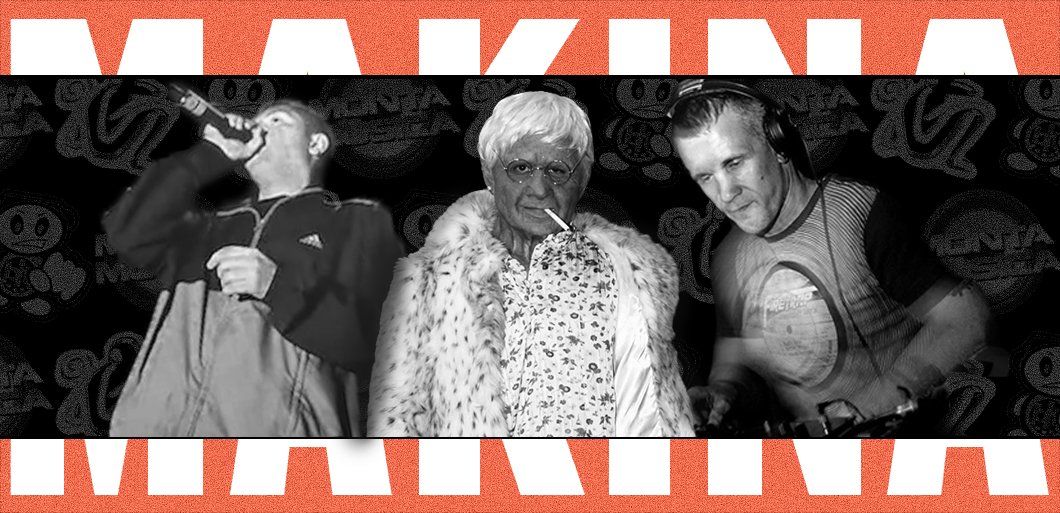
Makina and the North East: From Import to Institution
We chat with DJ Scott, Schak, and Lee Davidson as they trace Makina’s journey from Spanish import to North East institution, built in clubs, on tapes, and in the community.
Thomas Hirst
Last updated: 19th Feb 2026
“I don’t even remember choosing makina. It was just there. You heard it before you really understood what it was. It was around you all the time, so it didn’t feel like something you got into; it just felt normal. That was just the sound.”
For North Shields’ Schak, growing up in the North East in the 00s meant that the soundtrack to your youth was makina.
You heard it blasting from the cars driving by, from groups of lads playing it from their phones, hunkered down in bus stops, one of them inevitably attempting an MC spot over the top. It moved quickly through schools, traded in snippets over MSN, or in full through the infrared of two phones pressed together.
“My school was completely entrenched in it,” he said. “That’s how it got me. Not through clubs, not through events, but just because everyone around me was listening to it.”
“Makina was just part of the environment. It wasn’t a moment where I discovered it; it was already everywhere.
Schak
A Spanish import, built on an unsubtle, bouncy style of hard dance, with hooks you yell back, Euro-trance melodies and a hardcore spine; makina (mak-ee-na) is a genre you know when you’ve heard it.
But the problem - especially for the passionate folks up in Tyneside - is the fact that most of the country hasn’t.
Hyper-locality of genre is something the UK isn’t a stranger to; Bradford had bassline, London had grime, Bristol had trip-hop, yet for all of these once hyper-local genres, the rest of the country - and world for that matter - has taken them and made their own. Why is it then that barely anyone outside the North East has heard of makina?
Part of the answer lies in how it arrived there, and what happened once it did.
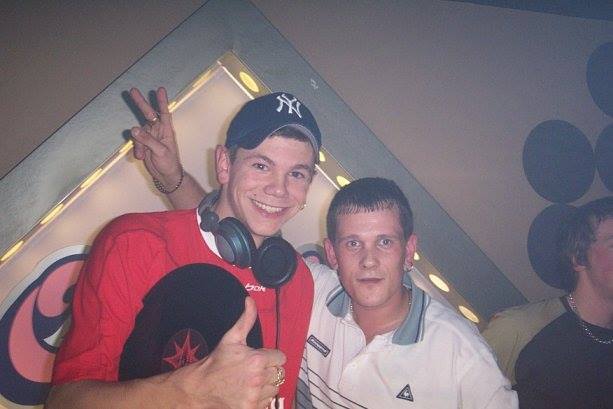
DJ Scott (right)
Back in the late 90s, Scott Jenner, aka DJ Scott, was running After Dark 2, and the once club-filling mix of “Scottish techno, Italian rave, and Dutch rave” was starting to lose its appeal.
Not convinced by the happy hardcore creeping up from London - “Proper cheesy vocals and piano. We were never into that. A couple of DJs were playing it, but it wasn’t really doing anything up here.” The lack of fresh sounds meant the club crowds were starting to peter out.
Thankfully, around the same time, Scott was starting to pay closer attention to a handful of Spanish records he’d been collecting.
“I’d started picking up bits of Spanish makina from around ‘97, ‘98. There weren't loads, maybe about 30 tracks over a couple of years, but something about them stood out. Don’t get me wrong, some of them were crap, but some of them were just magic.”
“What really drew me to them was the covers. Over here, you’d get a sh*t record on a white label with a sticker on it. Over there, it was colourful, properly designed, professional - you just wanted it.”
Those colourfully designed sleeves caused a stir between his ears, and after exhausting his small collection - “I’d buy a record, play it five times, then feel like I needed something else” - he realised that he was only scratching the surface.
“I remember reading the backs of the records - the catalogue numbers, the labels - and thinking, ‘f***ing hell, there’s loads of these.’”
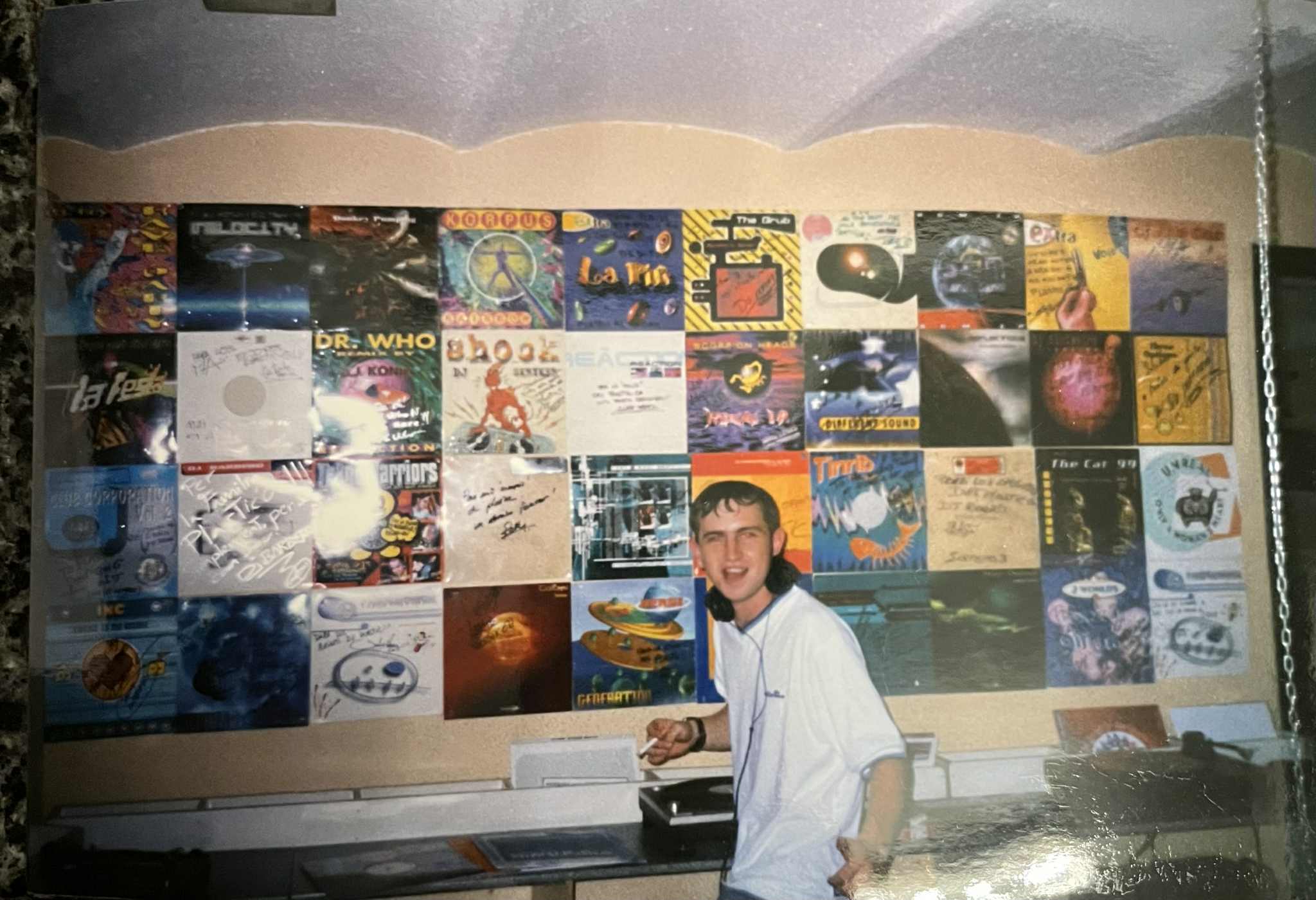
Barcelona records shops on DJ Scott's trip
That curiosity launched a sonic inquisition to Barcelona with his pal Darren Adamson, a trip the more cynical among you may call a bit daft, but one that ultimately gave rise to everything the genre is today.
“I said to my mate, ‘Let’s just jump on a plane and go to Barcelona.’ And he was like, ‘Why?’ And I said, ‘Because this record says there’s a thousand records in the catalogue, let’s just go and see.’”
A £30 EasyJet flight, nowhere to stay, and a club back home in need of something new, Scott and his mate found themselves on the cobbles of Barcelona’s Las Ramblas. Walking into “their version of HMV,” they were surprised to find a DJ downstairs spinning makina, and a wall packed out with the same colourful sleeves Scott had been lusting over.
“The records were all on display, and there were like 10, 15, 20 copies of each one. I just went, ‘Right. I’m getting them all.’ I got a copy of every single one.”
Scott Jenner (DJ Scott)
Still obsessing over the sleeves and the reappearance of the name Divusca, Darren asked: “Should we go to the record label? It’s on the back.”
A quick taxi ride later, they were outside the now legendary Bit Music. And after an awkward explanation of what two English lads were doing there, trying to buy up all their records, they were invited inside and suddenly surrounded by more makina than they knew what to do with.
“The whole situation was mad,” Scott said. “On EasyJet, no clue what we were doing, no hotel. We had to find a hostel, sharing rooms with strangers on bunk beds. Then turning up at a record label where they couldn’t speak English, and these two crazy English lads are knocking on the door.
“This was 20–25 years ago. I probably looked like a proper f***ing chav. My mate looked like somebody’s uncle. They must’ve thought, ‘Who the f*** are these?’”
A delivery company was sorted - “It was cheap as owt to get them over, but it took weeks. I always joke it must’ve come over on a horse and cart because it was that cheap” - and to keep them occupied in the meantime, the pair went back into town and filled sports bags with hundreds of records to bring back on their flight.
Thankfully, this was a time before you had to pay for extra baggage.
“I came back with about 400 records, not knowing if they’d ever sell,” Scott said. “I played a few in After Dark 2. At first, it wasn’t working, but after about four months, it kicked right off. With records, something new takes a while.”
“We did that trip about four times. We were buying 1,000 records at a time, and the Spanish companies were charging about £30 for delivery. About four or five months in, we made a distribution business called Makina Music UK and just flooded the shops. I built a business out of it for eight years.”
A key part of that success was a mixtape that Scott and his crew would release every week. “We were selling 250 to 500 tapes a week in local shops,” said Scott. “And once people started overplaying these songs, they became massive.
Those tapes are something Schak remembers with an eager fondness.
“Every Sunday, they’d make a tape recording, and the cassette tapes would be sold on the Quayside stalls in Newcastle,” Schack explained.
“We were always waiting for the new sets. People would have them on the phone, ‘Have you heard this? I’ll send you this.’ That’s how it got passed around. It was mental.”
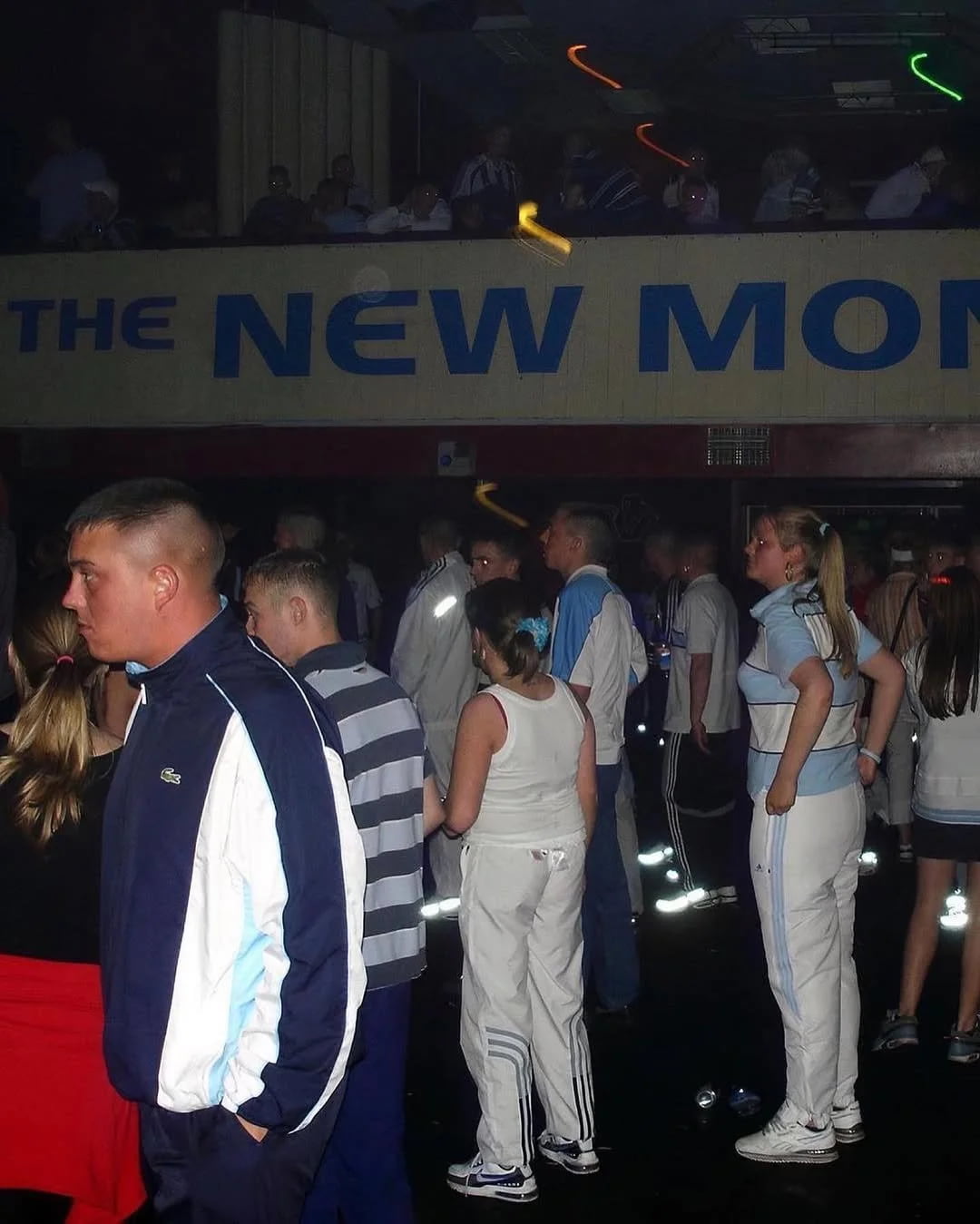
Yet, as with any hyper-localised genre, makina’s hold on the North East wasn’t just rooted in sound and noise - It was anchored in a place.
A club, of course. One mythologised in the region's musical folklore.
The New Monkey.
While it didn't take off until After Dark 2 shut down in 2000 - “After Dark was a Friday, The Monkey was a Saturday, and people could only afford one night,” Scott explains - the two clubs shared an owner and a similar ethos, but the New Monkey existed under far looser rules.
With no alcohol licence and operating under the guise of a private members’ dance club - “They didn’t sell beer, but everyone knows they were full of drugs” - it was the introduction of makina that saw it truly soar.
Perhaps the most lasting part of its legacy, though, was their policy on age, or lack thereof...
“They’d let 13 and 14-year-olds in,” Scott says.
“You’d say to your mam, ‘I’m sleeping at Johnny’s,’ and Johnny said he’s sleeping at yours. But you’d both be in The New Monkey.”
Scott Jenner (DJ Scott)
One of those teenagers was Lee Davison, founder of the Newcastle-based makina label Monta Musica. It was one of the few club experiences he had before joining the army at 16.
“I only went a couple of times. I think I was around 13,” Lee says. “I remember walking in, and MC Storm was on, which was mad because he was A hardcore MC from down south. But it’s a funny story, I actually ended up meeting Storm's brother later when I was in the army."
Yet, unfortunately for him, Schak was not one of those teenagers.
“The Monkey was 16 and over, and it closed when I’d just turned 15. I’m not the tallest person in the world, so I didn’t think I would get in,” he said. “But looking back, I would have got in, because there were kids who were like 11 in there.
“The only regret in my life is that I never went there, because you will never, ever see nightclubs like that in the United Kingdom, or more or less the world, ever.
“They just don’t exist anymore. They’re gone. It’s such a pivotal part of history. I really wish I went.”
Like most things that burn so brightly, The New Monkey didn’t last.
Tensions had already begun to creep in - between Scott and the club’s owner, between the music and the reputation forming around it. Overdoses on the dancefloor, constant police attention, and a growing sense that the club was being watched rather than listened to.
In March 2006, it ended abruptly. A 100-strong police raid, 14 arrests, and the doors closed for good.
Yet, while the New Monkey’s closure might read like an ending on paper. In reality, it lived on in the hearts and souls of those who had experienced it, with the North East never truly letting go.
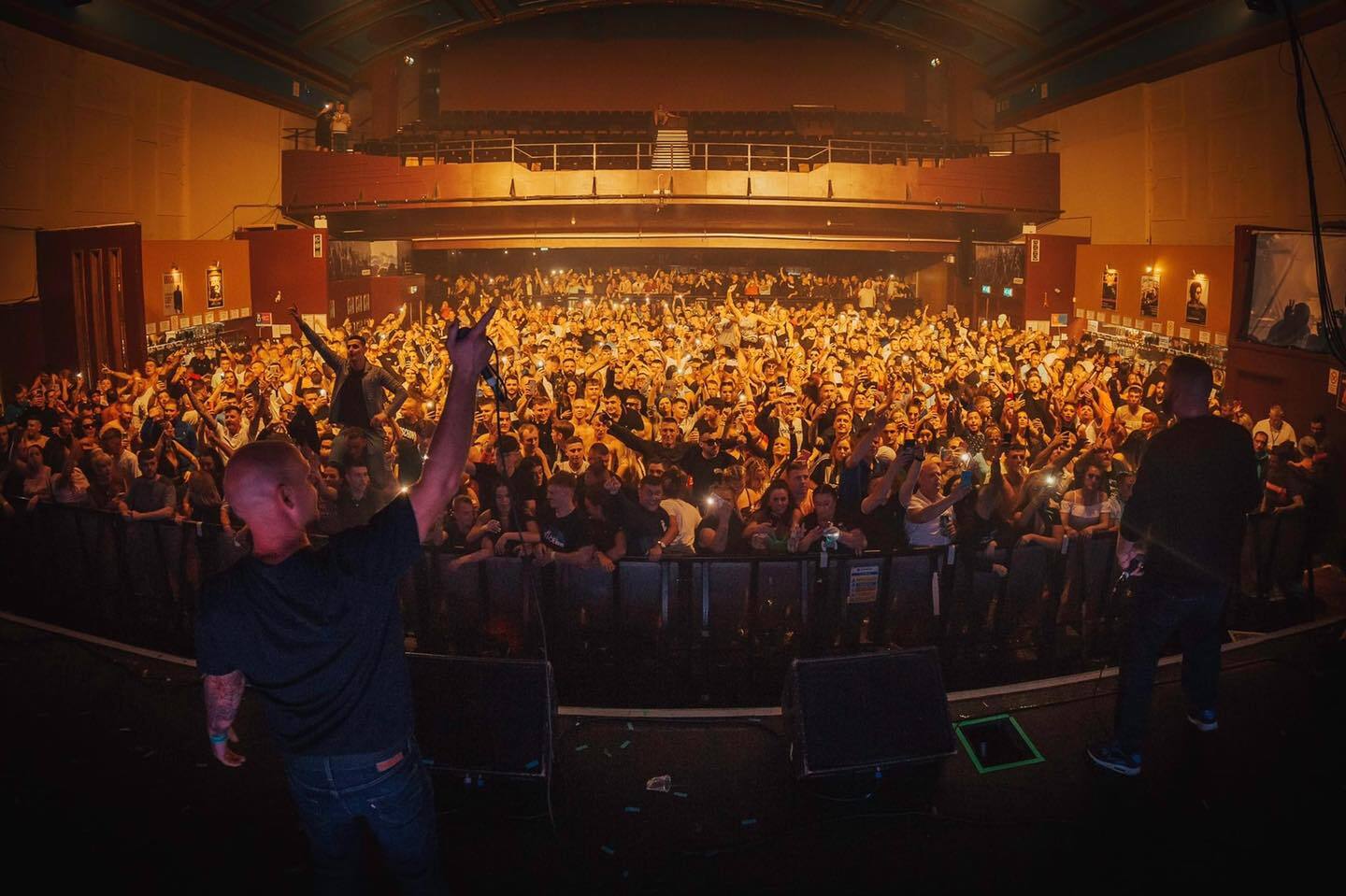
Monta Musica
One of the people who carried it forward was Lee Davison.
Whilst in the army, Lee was the regiment DJ, one who had grown up on makina, playing it wherever he could - regimental bars, beach bars while on tour - long before he ever thought about promoting it. When a looming medical discharge forced him to think about what came next, an idea with his regiment pal Ryan Lambert (DJ K9) later, and the answer felt obvious.
“It was always the music I’d listened to since I was a kid,” he says.
That instinct became Monta Musica. It started simply: a website to sell their own tracks, before turning into events once Lee returned home. From the very first night in the upstairs room of Liquid & Envy, it was clear the appetite for makina hadn’t gone anywhere.
“We sold the first night in Envy out,” he says. “At that point, it was never meant to be some massive thing. I was just putting on a night for the music I loved.”
By the second or third event, the scale became harder to ignore.
“After the first couple, the manager was already asking if we wanted to move downstairs into Liquid,” Lee recalls. “That was the big room, about a 2,000-capacity venue.”
“That was the point where I realised this was bigger than I thought it was going to be.”
Monta Musica went on to sell out regular 2k-cap nights at the O2 in Newcastle, and for many of the younger generation, they use the 'Monta' moniker in place of makina when referencing the genre.
It's clear then that the appetite for that music never left. It was carried forward by the people who’d grown up inside it, who’d been shaped by it. The idiom of capturing lightning in a bottle is often overused, but for the North East, this Spanish lightning never left them.
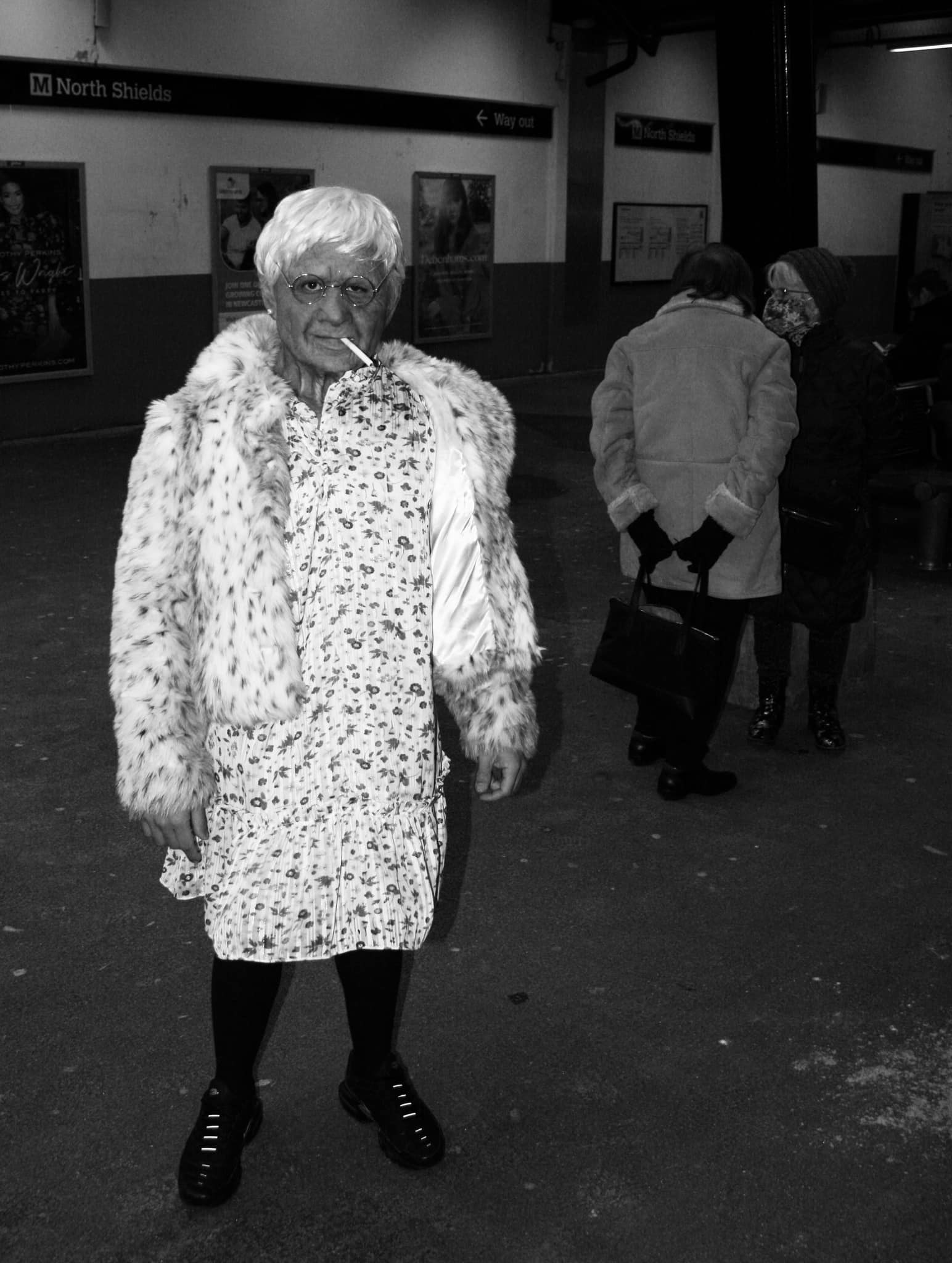
Nanna Makina
Another expression of that continuation is Schak.
Already carving out a name for himself as a DJ, it took seeing fellow Geordie - “someone really prevalent in the story” - Patrick Topping, still flying makina’s flag on stages as big as Glastonbury, to pull him back towards it.
A professional old lady mask from a special effects company (due to being 5 ft 3, he didn't fit into the male costumes), a floral gown, and a rediscovery of the genre later, his alter ego of Nanna Makina was born, and what started as a Halloween costume turned into a movement.
“Not many people were playing the older stuff at the time, and that was my whole thing with Nanna Makina. My title was ‘The Resurrection’ - resurrecting old makina.”
It forced him down a rabbit hole, rediscovering tracks he’d not heard in over a decade. “I found it hard to listen to at first because it brought up a load of emotions from my youth,” he said. “But I fell in love with it again.”
“I found it hard to listen to at first because it brought up a load of emotions from my youth. But I fell in love with it again.”
Schak
“Everybody thought Nanna Makina was a joke, a gimmick. But at my first event, we did nearly 1,000 tickets. Makina is a small genre; 1,000 tickets is a lot. It’s still one of the best sets I’ve ever done. I put preparation into it, and the execution was 100%. I nailed it. I’m proud of it.
“It was totally unique. I had my own edits. People were like, ‘How have you done this? This doesn’t go like this.’ And I was like, ‘Because I’ve edited it.’”
Then COVID hit, but Schak, having found a new purpose, was anything but deterred. “Clubs closed, everyone was miserable. I thought if I livestream on a Saturday night, I’ll entertain people.”
He spent weeks delving into old makina mixes and tracks on YouTube, downloading his favourites, ready to spin on this new online space. The first set had 20 people, the second 2,000.
“I’ll never forget it. Hot Since 82 was doing a livestream in a hot air balloon for Beatport, and I had more people watching me jumping around my living room dressed as an old woman.
“I’d get messages, hundreds, if not thousands of people saying, ‘You stopped me killing myself,’ ‘You saved me,’ ‘Thank you for what you do.’ It was why I got up every day.”
It’s clear, then, that makina never calcified into folklore. It didn’t become something people only spoke about in the past tense. Today, despite its Spanish origins, the genre arguably has more devotees in the North East than in the country that birthed it.
That longevity still surprises the man who helped bring it there in the first place. What began as a handful of records, a daft flight to Barcelona, and a club in need of something new has outlived venues, formats, and entire scenes around it.
“I’ve been playing this since 1997, that’s 27 years. I’m thinking, ‘F***ing hell, I brought this over 27 years ago,’ and it’s still out there doing most of the raves around here these days.
“I never thought it would last this long.”
In the years that followed, makina didn’t disappear; it redistributed. Through labels like Monta Musica, through nights promoted by people who’d grown up inside the sound. It found new rooms to occupy. Lee Davidson’s return from the army and the success of his early events weren’t a revival so much as a reminder that the appetite had never left.
“It’s our identity. It lives inside all of us,” Schak says.
“Makina was made in Barcelona, but we took it to the North East, and it became part of our identity. It’s more popular here now than it is in some parts of Spain. That’s beautiful.”
“I grew up with it. It’s not just my DNA. It’s our DNA. We used to be out on the streets drinking, putting sets on, listening to it. It formed the identity of our culture, who I am as a person. And it’s had a lasting effect.”
Follow us on Instagram, TikTok, Threads, Facebook, and YouTube for the latest music and events content.


Read more news




Articles you may be interested in


related artists


Gigs ● Clubs ● Festivals ● Things to do
“On your side since 2001, because we believe true fans deserve a fairer and smarter way to discover events they love.”
Why use Skiddle?
- Rated 5 stars on reviews.co.uk
- Over 17 million tickets sold
- Over 4.3 million happy customers
- Skiddle Supports - Together, we are More Than A Ticket
- Official Primary Ticket outlet
- Established 2001
- Support the Fanfair Alliance
- Sustainability - Make a positive impact
© 2001 - 2026 Skiddle Ltd | Skiddle is a registered trademark | ALL RIGHTS RESERVED